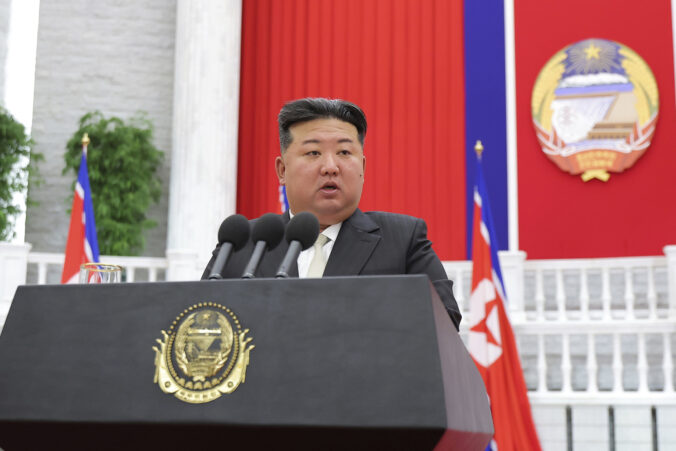
Kim Jong-un Writes to Aleksandar Vučić: A Courtesy Message With Strategic Undertones

Belgrade/Pyongyang — Diplomatic letters are often routine, but timing can transform a simple message into a geopolitical signal. North Korean leader Kim Jong-un has sent a congratulatory letter to Serbian President Aleksandar Vučić marking Serbia’s Statehood Day — while also expressing interest in strengthening bilateral relations between the two countries.
👉 Read more global political analysis at https://www.liveworldupdates.com/
A message rooted in history
The letter commemorates Serbia’s national holiday, which marks both the 1804 uprising against the Ottoman Empire and the adoption of the Serbian principality’s constitution in 1835. According to North Korea’s foreign ministry, Kim expressed hope that relations would develop “in accordance with the interests of the peoples of both nations.”
The reference is not accidental. Serbia — formerly part of socialist Yugoslavia — maintained diplomatic ties with Pyongyang during the Cold War under the Non-Aligned Movement. While largely dormant today, those links still exist formally.
Serbia’s balancing foreign policy
Modern Serbia follows a complex diplomatic strategy. Its official long-term goal remains membership in the European Union, yet Belgrade simultaneously cultivates economic cooperation with China, maintains historical ties with Russia, and deepens trade relations with South Korea.
Because of that positioning, analysts interpret the letter primarily as symbolic rather than practical. International sanctions on North Korea severely limit economic cooperation, and Serbia’s trade structure is overwhelmingly oriented toward European markets.
Why North Korea is reaching out
Pyongyang has increasingly relied on symbolic diplomacy to counter international isolation. Such communications serve several purposes:
- projecting international relevance
- reinforcing legitimacy at home
- maintaining historic diplomatic networks
The Balkans represent a useful region for such gestures — politically European, but historically connected to former socialist alliances.
Limited practical consequences
No immediate agreements or economic projects are expected from the exchange. Serbia’s technological partnerships with South Korea — a direct geopolitical rival of North Korea — underline the largely ceremonial nature of the message.
Yet even symbolic diplomacy matters. In a fragmented global order, maintaining communication channels has become part of strategic positioning, especially for states navigating between alliances.